
Every student learns differently. Some absorb information best through visuals, while others prefer hands-on activities or structured reading. For decades, educators have recognized this reality, yet most classrooms still operate on a one-size-fits-all model. That is now changing.
Artificial intelligence personalized learning is reshaping how schools deliver instruction. By analyzing individual student data in real time, AI systems can adapt lessons, pacing, and content to meet each learner where they are. The result is a more responsive and student-centered educational experience that was difficult to achieve at scale just a few years ago.
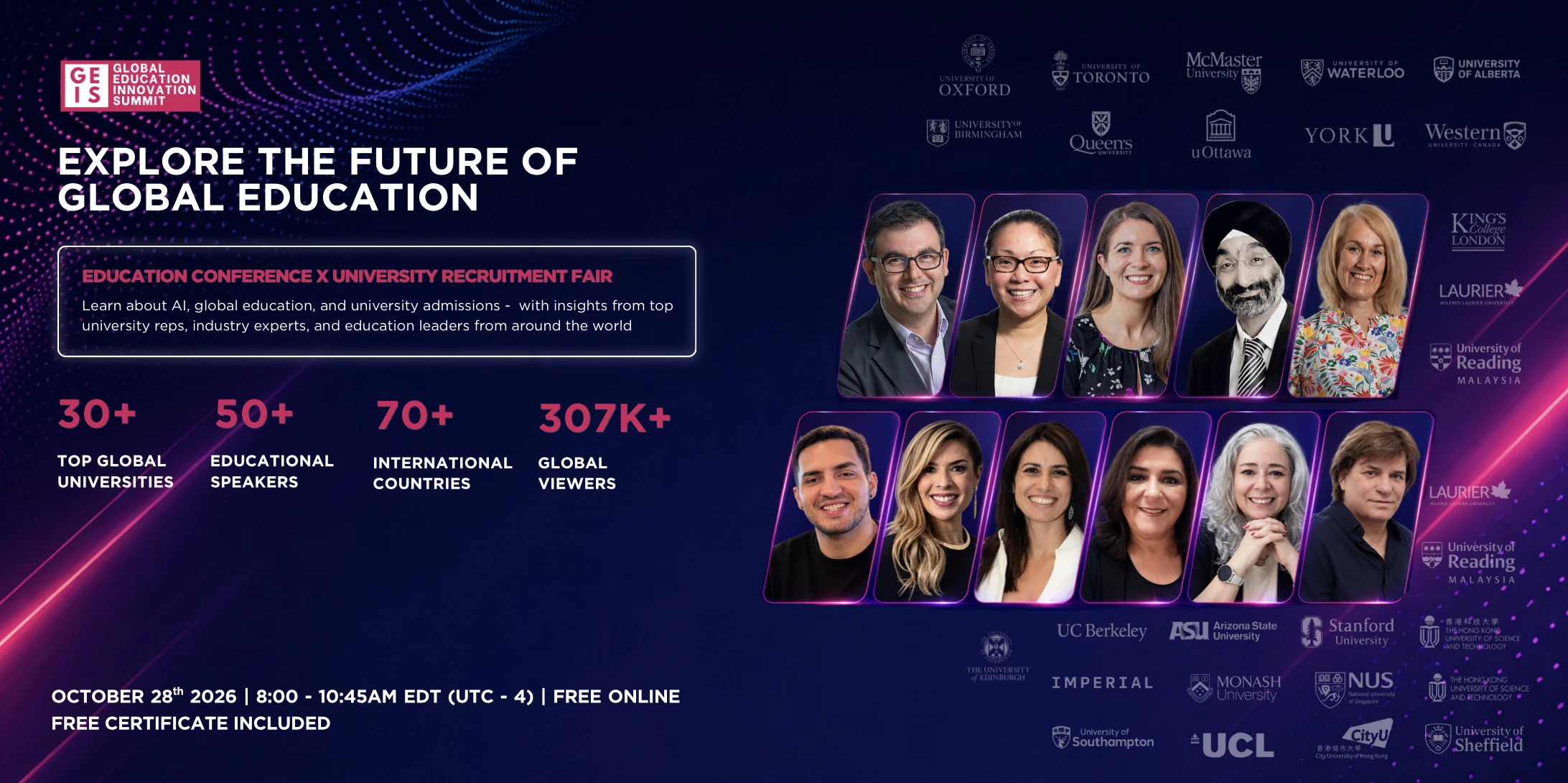
As this transformation unfolds, education leaders, school owners, and parents have a timely opportunity to explore these developments firsthand. The Global Education Innovation Summit (GEIS) 2026, hosted by Rosedale International Education on October 28, 2026, brings together 30+ global speakers and 40+ world-class universities to examine exactly how AI, innovation, and technology are redefining the future of learning.
What Personalized Learning Means in an AI-Driven World
Personalized learning is an educational approach that tailors instruction, content, and pacing to the individual needs, strengths, and interests of each student. While the concept is not new, AI has made it achievable at a scale that was previously impossible.
In a traditional classroom, a teacher manages 25 to 40 students with varying levels of ability and engagement. Differentiation is possible, but it demands enormous time and effort. AI personalized learning changes this dynamic by automating the process of identifying what each student knows, where they struggle, and what type of content will help them progress most effectively.
AI driven personalized education relies on algorithms that continuously analyze student interactions, including their responses to questions, the time they spend on specific tasks, and even the strategies they use to solve problems. Based on these insights, the system adjusts the difficulty of assignments, recommends targeted practice, and provides real-time feedback.
Think of it as a GPS for education. Just as a navigation app recalculates your route when you take a wrong turn, personalized learning AI recalculates the learning path when a student struggles or excels in a particular area. The destination remains the same, but the route adapts to the individual journey.
How Adaptive Learning Platforms Use AI to Tailor Student Experiences
AI adaptive learning platforms represent one of the most practical applications of artificial intelligence in education today. These platforms use machine learning and data analytics to create unique learning paths for each student, adjusting content in real time based on performance.
DreamBox Learning, for example, is an adaptive math platform designed for K-8 students. The system analyzes tens of thousands of data points per student per hour, including how students approach and solve problems, to make continuous adjustments to instruction. Lessons become more challenging as a student demonstrates mastery, or they revisit foundational concepts when gaps are detected.
Khan Academy’s AI tutoring assistant, Khanmigo, takes a different approach. Powered by advanced language models, Khanmigo acts as a personalized tutor that guides students through Socratic questioning rather than simply providing answers. It adapts to each student’s level and has expanded to support multiple languages, making it accessible to a broader global audience.
Other platforms like Squirrel AI, widely adopted in China, and Century Tech in the United Kingdom, further demonstrate how ai personalized learning is being implemented across different educational contexts and cultures. These systems share a common principle: use data to understand the learner, then deliver the right content at the right time.
For school owners and administrators, the key takeaway is clear. Adaptive learning technology is no longer experimental. It is a proven tool that can support differentiated instruction and improve learning outcomes across diverse classrooms.
Case Studies: Schools Implementing AI-Powered Personalized Learning
Across the globe, schools are already putting AI personalized learning into practice, and the results offer valuable lessons for educators and decision-makers.
Alpha Schools (United States)
Alpha Schools, a private K-12 network in the United States, has integrated AI into daily classroom instruction. Students at Alpha Schools use AI-powered platforms for one to two hours per day in core subjects such as math, science, and reading. Each student is paired with a human guide rather than a traditional teacher. According to the school network, its students rank in the top one percent on national standardized tests and progress at a rate approximately 2.6 times faster than their peers on MAP assessments. The model emphasizes that AI supports instruction while human guides provide mentorship and motivation.
Tecnologico de Monterrey (Mexico)
In Latin America, Tecnologico de Monterrey made personalized learning one of its three strategic educational initiatives. The university deployed adaptive modules with artificial intelligence to diagnose first-year students and generate personalized content and study paths. Across its six schools, the initiative reached over 10,000 students through various courses and became a foundation for the institution’s evolving educational model.
Schools Using Flint AI (United States)
Several schools, including Providence Day School and Woodward Academy, have partnered with Flint, an AI platform that enables teachers to create personalized learning activities based on materials they already use in their classrooms. These partnerships demonstrate that ai personalized learning does not require schools to overhaul their existing curriculum. Instead, AI can be layered on top of established teaching practices to provide differentiated learning experiences while maintaining data privacy and academic standards.
Limitations and the Human Element in Personalized Education
While the potential of AI adaptive learning is significant, it is important to recognize what artificial intelligence cannot do. The conversation in education has shifted from whether AI will replace teachers to how AI will redefine the role of teaching. The consensus among educators and experts is consistent: AI can handle tasks, but it cannot replace the educator.
AI excels at processing data, identifying patterns, and delivering content efficiently. However, genuine personalized education involves far more than content delivery. It requires understanding the emotional state of a student, building trust, fostering curiosity, and navigating the social dynamics of a classroom. These are distinctly human capabilities that no algorithm can replicate.
There are also practical concerns. AI systems rely on data, and the quality of their recommendations depends on the quality and quantity of the data they collect. Schools with limited technology infrastructure may face challenges in implementing these tools effectively. Additionally, questions around student data privacy and algorithmic bias remain important considerations for school leaders and parents.
The most promising model is a collaborative one. In schools that have successfully implemented personalized learning ai, teachers spend less time on administrative tasks and more time on high-value interactions such as mentoring, facilitating discussions, and leading project-based learning. AI handles the routine aspects of assessment and content delivery, freeing educators to focus on what they do best: inspiring and guiding young minds.
As UNESCO has noted, demand for teachers is projected to rise through 2035, in part because personalized learning increases the need for skilled human guidance. AI is a powerful teaching assistant, but it is not a teacher.
Frequently Asked Questions
What is AI personalized learning?
AI personalized learning is an educational approach that uses artificial intelligence to tailor instruction, content, pacing, and feedback to the individual needs of each student. AI systems analyze student performance data in real time and adjust the learning experience accordingly, ensuring that every learner receives targeted support.
How does AI adaptive learning differ from traditional teaching methods?
Traditional teaching typically delivers the same content to all students at the same pace. AI adaptive learning, on the other hand, continuously monitors each student’s progress and modifies the difficulty, sequencing, and type of content to match their current level. This allows students to move at their own speed and receive focused practice on areas where they need the most improvement.
Is AI going to replace teachers in schools?
No. Artificial intelligence personalized learning is designed to support teachers, not replace them. AI handles data analysis, automated grading, and content recommendations, while teachers focus on mentoring, building relationships, and fostering critical thinking. The most effective implementations treat AI as a tool that enhances the teacher’s ability to address individual student needs.
What is the Global Education Innovation Summit 2026?
The Global Education Innovation Summit (GEIS) 2026 is a free, live virtual event hosted by Rosedale International Education on October 28, 2026. The summit brings together education leaders, AI innovators, university representatives, parents, and students from over 72 countries to explore how AI and technology are transforming education. Registration is free and open to everyone.
Who should attend GEIS 2026?
GEIS 2026 is designed for school owners, administrators, educators, parents, and students who want to stay ahead of developments in AI and education innovation. The event features 30+ speakers from institutions such as Oxford, Imperial College London, University of Toronto, and Arizona State University, along with interactive sessions on topics ranging from AI in education to global admissions strategies.
Explore AI in Education at the Global Education Innovation Summit 2026
The future of education is not something that will happen to us. It is something we can shape together. Whether you are a school owner evaluating new technology for your institution, an educator looking to enhance your teaching practice, or a parent seeking the best learning environment for your child, understanding AI personalized learning is essential.
The Global Education Innovation Summit 2026 offers the perfect opportunity to deepen that understanding. Hosted by Rosedale International Education on October 28, 2026, this free virtual event connects you with 30+ world-class speakers, 40+ leading universities, and a global community of educators and innovators from over 72 countries.
From fireside chats on reimagining education for an AI-driven future to panel discussions on student readiness, GEIS 2026 delivers practical insights and actionable strategies. All attendees also receive a free certificate of participation.
Do not miss this chance to connect with the ideas and people shaping the future of learning. Register for free at geisummit.com.