
The way the world teaches and learns is shifting faster than ever before. From classrooms in Southeast Asia to university lecture halls in Europe, education systems are being reshaped by technology, evolving workforce demands, and a growing emphasis on global collaboration. Understanding global education trends in 2026 is no longer optional for school leaders, university administrators, and parents. It is essential for making informed decisions about curriculum design, institutional strategy, and student outcomes.
This year, several key forces are converging to redefine what education looks like on a global scale. Artificial intelligence is moving from an experimental tool to a structural component of learning environments. Hybrid models are becoming standard practice rather than emergency measures. And curricula worldwide are pivoting from knowledge-based instruction toward practical, skills-driven frameworks that prepare students for rapidly changing labor markets.
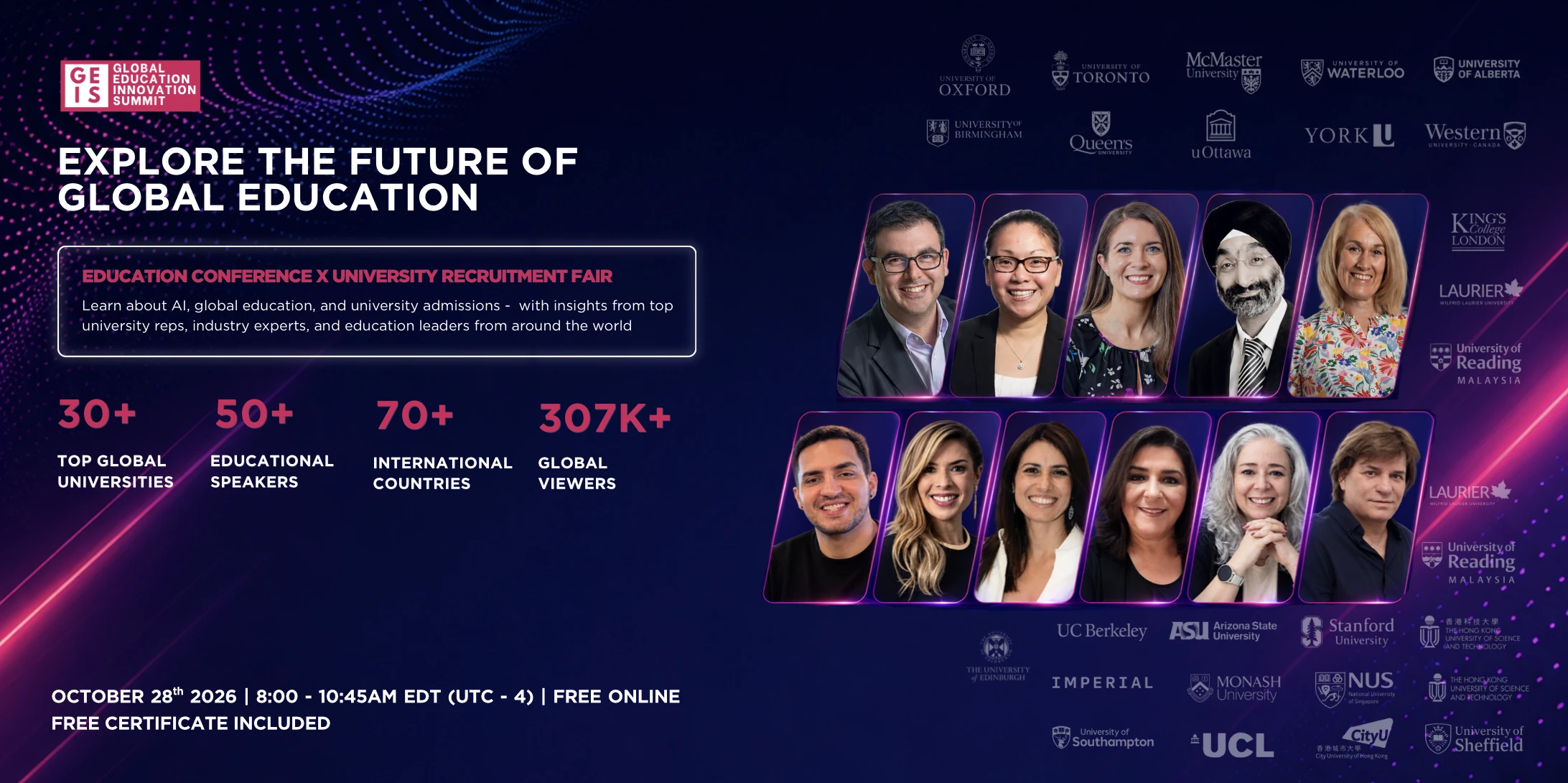
Whether you lead a school, manage university admissions, or are exploring the best education pathways for your children, the trends outlined below will help you navigate this evolving landscape. And if you want to hear directly from global experts on these topics, the Global Education Innovation Summit (GEIS) 2026 is the place to be.
The Top Global Education Trends Defining 2026
Education trends 2026 are defined by a convergence of technological innovation, policy reform, and student expectations that transcend national borders. According to HolonIQ’s 2026 Global Education Outlook, institutions worldwide are investing in AI that is ethical, transparent, and instructionally credible, while regional strategies are being shaped by demographics, fiscal constraints, and labor market urgency.
The global education market, estimated at approximately $7 trillion in 2025, continues to expand as governments and institutions recognize education as a strategic lever for economic growth and global competitiveness. Within this landscape, three international education trends stand out as the most transformative forces of the year: AI integration, hybrid learning, and skills-based curricula.
These are not isolated developments. They are interconnected shifts that are collectively redefining how students are taught, how institutions operate, and how educational value is measured across the world.
AI Integration, Hybrid Learning, and Skills-Based Curricula
AI in Education: From Experimentation to Infrastructure
Artificial intelligence has moved well beyond the pilot stage. In 2026, AI is becoming embedded into the infrastructure of K-12 schools and universities alike. Education leaders report that AI-powered personalized learning tools are becoming a standard feature rather than a novelty, helping institutions deliver tailored instruction at scale.
The applications are extensive. AI tutoring systems now provide individualized feedback and adaptive learning paths. Administrative platforms use machine learning to streamline enrollment, scheduling, and academic performance tracking. At the institutional level, universities are developing centralized AI platforms and building in-house technology systems to keep pace with the rapidly advancing capabilities of these tools.
However, the integration of AI also raises important questions about ethics, data privacy, and academic integrity. Institutions are grappling with decisions about which elements of educational context should be shared with AI systems, what must remain private, and how to enforce clear boundaries. This ethical dimension of AI in education will be a central topic at the Global Education Innovation Summit 2026, where speakers from Oxford University, Tsinghua University, and Arizona State University will share their perspectives.
Hybrid Learning: The New Standard
Hybrid learning, which combines in-person instruction with digital platforms and online resources, has evolved from a pandemic-era necessity into a deliberate pedagogical strategy. In 2026, educational institutions across the globe are adopting hybrid models because they improve accessibility, accommodate diverse student needs, and allow for more flexible scheduling.
The hybrid approach is particularly valuable for international education, where students often span multiple time zones and require access to learning materials outside traditional classroom hours. Platforms that integrate video-based learning, cloud-based assessments, and collaborative digital workspaces are enabling schools and universities to deliver consistent, high-quality instruction to geographically distributed student populations.
For school owners and administrators, the shift toward hybrid models also represents an opportunity to differentiate their institutions. Schools that offer robust digital infrastructure alongside strong in-person experiences are better positioned to attract students and families who value flexibility without sacrificing academic rigor.
Skills-Based Curricula: Preparing Students for the Workforce
One of the most significant future trends in education is the transition from traditional, knowledge-based instruction to curricula centered on practical, industry-relevant competencies. Employers increasingly value critical thinking, digital literacy, communication, and problem-solving skills over rote memorization of facts.
In 2026, many universities and training programs are redesigning their curricula to emphasize project-based learning, real-world problem solving, internships, and professional certifications. This competency-first approach allows students to demonstrate tangible skills that align with labor market demands, making them more competitive in a global economy.
The emphasis on skills-based education also extends to the concept of lifelong learning. In a world where technological change is constant, individuals are expected to continuously update their knowledge and capabilities throughout their careers. Institutions that build flexible, modular learning pathways will be better equipped to serve both traditional students and working professionals seeking to upskill.
Regional Differences: How Trends Play Out Across Continents
While global learning trends share common themes, the way they manifest varies significantly by region. Understanding these differences is critical for school leaders, universities, and families navigating international education pathways.
Asia Pacific: A Rising Education Hub
Asia is consolidating its position as one of the leading destination regions for international students. The region now has more universities in the 2026 QS World University Rankings than any other, with 565 institutions represented. Intra-Asia student mobility is accelerating, and the expansion of branch campuses across the region is adding to its attractiveness as a study destination.
Countries like Singapore, China, Japan, and Malaysia are investing heavily in AI-driven educational infrastructure, and institutions in the region are combining deep regional expertise with internationally recognized academic standards. The Asia-Pacific Higher Education Conference (APAIE) 2026, held in Hong Kong, highlighted how the region is actively reshaping global student mobility and transnational education.
Europe: Policy Innovation and Cross-Border Collaboration
Europe continues to lead in cross-border educational collaboration, with programs such as Erasmus+ enabling student and faculty exchanges across the continent. The European Association for International Education (EAIE) 2026 conference is addressing topics ranging from the future of international research cooperation to the evolving Erasmus+ framework beyond 2027.
At the same time, some European countries are navigating shifts in international enrollment. The Netherlands, for instance, reported its first-ever decrease in foreign enrollment for the 2025/26 academic year, signaling that even established destinations must adapt to changing student preferences and policy environments.
North America: AI Leadership and Workforce Alignment
In North America, particularly in the United States and Canada, the focus is on aligning educational outcomes with workforce needs. Education leaders in the region are prioritizing AI integration as district-level infrastructure rather than an optional classroom tool. The emphasis is on tightening the connection between classrooms and careers, with institutions increasingly redesigning curricula to ensure graduates are prepared for AI-influenced job markets.
Canada, a major destination for international students, is also navigating visa policy changes and housing challenges that affect its ability to attract and retain global talent. These dynamics are pushing institutions toward more sustainable, student-centered recruitment strategies.
What These Trends Mean for Schools, Universities, and Students
The convergence of AI integration, hybrid learning models, and skills-based curricula creates both opportunities and challenges for every stakeholder in the education ecosystem.
For school owners and administrators, these global education trends signal a need for strategic investment in digital infrastructure, teacher professional development, and curriculum modernization. Schools that proactively adopt technology-enhanced learning environments will be better positioned to attract students, retain talented educators, and meet the expectations of parents who increasingly value innovation alongside academic excellence.
For universities and higher education institutions, the shift toward skills-based education and AI-powered learning platforms requires a fundamental rethinking of how academic programs are designed and delivered. Admissions processes, career readiness strategies, and employability outcomes must all evolve in response to changing workforce realities and employer expectations. The question is no longer whether institutions will adopt AI, but how they will guide that transformation responsibly.
For parents and students, understanding education trends 2026 is essential for making informed decisions about school selection, curriculum pathways, and long-term career planning. Families should look for institutions that balance technological innovation with strong pedagogical foundations, and that offer clear pathways to global education and career opportunities.
Global student mobility is projected to exceed nine million by 2030, driven by the rapid growth of youth populations in South Asia and Sub-Saharan Africa. As international education becomes more accessible and competitive, the institutions that invest in innovation today will be the ones that lead tomorrow.
Frequently Asked Questions
What are the biggest global education trends in 2026?
The most significant global education trends in 2026 include the systemic integration of artificial intelligence into teaching and institutional operations, the widespread adoption of hybrid learning models that combine in-person and digital instruction, and the shift toward skills-based curricula that prioritize practical competencies over traditional knowledge-based approaches. Additionally, global collaboration in education and international student mobility continue to accelerate across all regions.
How is AI changing education in 2026?
AI is transforming education in 2026 by enabling personalized learning paths, automating administrative processes, and providing real-time feedback to students and educators. Universities and schools worldwide are integrating AI into their learning management systems, admissions processes, and career readiness programs. The focus is now on ethical, transparent, and instructionally credible AI implementation.
What is the Global Education Innovation Summit 2026?
The Global Education Innovation Summit (GEIS) 2026 is a live virtual event hosted by Rosedale International Education on October 28, 2026. It brings together education leaders, AI innovators, university admissions officers, parents, and students from over 72 countries to explore transformative education, AI technology, and international pathways from K-12 to higher education. The summit features 30+ global speakers and 43+ interactive sessions, with participation from more than 40 world-class institutions including Imperial College London, University of Oxford, National University of Singapore, and University of Toronto.
Who should attend GEIS 2026?
GEIS 2026 is designed for educators and teachers seeking professional development, school administrators exploring institutional transformation, parents and students researching global admissions and scholarship opportunities, and industry and EdTech leaders looking for partnership opportunities. Registration is free, and attendees receive a certificate of participation.
How can I register for the Global Education Innovation Summit 2026?
Registration for GEIS 2026 is completely free. Visit geisummit.com to register and secure your spot. All sessions are conducted online and will be recorded for on-demand viewing for 30 days after the event.
Shape the Future of Education at GEIS 2026
The global education landscape is evolving at an unprecedented pace. Staying informed about these trends is important, but engaging with the people and ideas driving them is what truly makes a difference.
The Global Education Innovation Summit 2026, hosted by Rosedale International Education, offers a unique opportunity to connect with 30+ world-class speakers, explore 43+ interactive sessions, and network with education professionals from over 72 countries. Whether you are a school leader looking to modernize your institution, a university representative exploring new partnerships, or a parent seeking the best global education pathways for your child, GEIS 2026 provides the insights and connections you need.
Join 307,000+ global educators, parents, and students on October 28, 2026, for one day of transformative conversations about AI in education, international admissions, and the future of learning.
Register for free at geisummit.com and be part of the conversation that is shaping education worldwide.