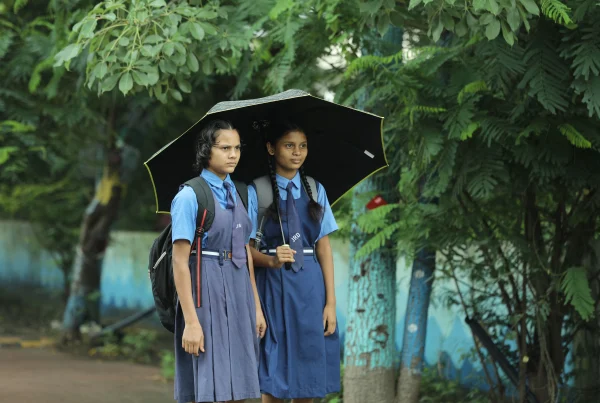

With nearly 15,000 international schools now operating worldwide and Asia hosting around 58 percent of them, the demand for globally recognized education continues to grow. But what are international schools, exactly? And how do school owners and parents identify the right curriculum for their students?
This guide compares leading curricula and offers a practical framework for making an informed decision.
What Defines an International School
International schools are institutions that deliver a curriculum different from the national system of the country in which they operate. They typically feature a multinational student body, instruction primarily in English, international accreditation from bodies such as the Council of International Schools (CIS) and assessment models recognized by universities worldwide.
The term covers a broad spectrum. Some institutions serve expatriate and diplomatic families, while others cater to local families seeking globally competitive international education. Some are standalone campuses, while others are partner schools that integrate an international curriculum alongside their national program. For school owners, partnering with an established curriculum provider allows institutions to offer globally recognized credentials without building new infrastructure.
Types of Curricula: IB, IGCSE, OSSD and National Systems
Curriculum choice shapes the academic pathway, the assessment model and the university destinations available to graduates.
International Baccalaureate (IB)
The International Baccalaureate is offered in more than 5,000 schools across over 150 countries. The IB Diploma Programme (DP), its most recognized component, requires students to study six subjects, complete a Theory of Knowledge (TOK) course, write an Extended Essay and fulfill Creativity, Activity, Service (CAS) requirements. The approach is inquiry-based and holistic, developing critical thinking across disciplines.
The IB suits schools seeking a comprehensive framework but requires significant commitment in teacher training, accreditation fees and curricular alignment.
Cambridge IGCSE and A-Levels
The International General Certificate of Secondary Education (IGCSE), developed by Cambridge Assessment International Education, is the most popular international qualification for students aged 14 to 16, taught in more than 140 countries.
The IGCSE offers up to 70 subject options, including 30 languages, allowing schools to tailor their offering to local needs. Students typically progress to Cambridge A-Levels, valued by universities in the UK and Commonwealth nations. Many schools combine IGCSE for the middle years with the IB Diploma for the senior stage.
Ontario Secondary School Diploma (OSSD)
The Ontario Secondary School Diploma is the official high school credential issued under the Ontario Ministry of Education in Canada. Consistently ranked among the top education systems by the OECD’s PISA assessments, Ontario’s curriculum emphasizes higher-order thinking skills, differentiated instruction and progressive evaluation.
What sets the OSSD apart is its delivery model. Schools can partner with an accredited Ontario school to integrate OSSD courses alongside their national curriculum. Students register with the Ontario institution, complete courses with centralized evaluation by Ontario Certified Teachers and earn credits toward the diploma.
The diploma requires 30 credits (18 compulsory and 12 elective), 40 hours of community involvement and completion of the provincial literacy requirement. Assessment follows a 70/30 model: term work accounts for 70 percent and final evaluations for the remaining 30 percent.
For school owners, the OSSD is a practical and scalable option that can be layered onto existing programs, requires no independent accreditation for the partner school and provides students with a globally recognized Canadian diploma.
National Curricula in International Settings
Many international schools deliver national curricula from the United States, the United Kingdom or Australia. American schools follow the Common Core State Standards with Advanced Placement (AP) courses, while British schools follow the English National Curriculum leading to GCSEs and A-Levels. For international primary schools, national curricula provide a strong foundation that can be supplemented with globally oriented programs at the secondary level.
How to Evaluate and Choose the Right International School
Whether you are a parent comparing institutions or a school owner assessing curriculum partners, these criteria provide a reliable framework.
Accreditation and Recognition. Verify that the school or curriculum provider holds recognized accreditation: IB authorization from the IB Organization, Cambridge affiliation with Cambridge Assessment International Education, or Ontario Ministry of Education approval for OSSD programs.
Curriculum Alignment with Student Goals. Consider where graduates intend to study. The IB Diploma is strong for European and North American universities. Cambridge A-Levels are highly regarded in the UK and Commonwealth. The OSSD provides a direct pathway to Canadian universities and is accepted globally. For diverse student populations, a curriculum that complements the existing national system is often more sustainable than replacing it.
Quality of Teaching and Assessment. In partnership models, centralized grading and transparent reporting are critical. Assessment models that evaluate students across multiple competencies produce more well-rounded graduates than those relying solely on high-stakes final examinations.
Technology and Learning Infrastructure. Schools that use integrated technology for curriculum delivery and progress tracking are better positioned to maintain consistency, particularly when the curriculum provider operates from a different country.
FAQ About International Schools
What are international schools?
International schools deliver education using a curriculum different from the host country’s national system. They typically serve a diverse student body, offer instruction in English and follow globally recognized frameworks such as the IB, Cambridge IGCSE or OSSD.
What is the difference between IB and IGCSE?
The IB is holistic and inquiry-based, requiring study across six subject groups along with the Extended Essay and Theory of Knowledge. The IGCSE focuses on subject depth and flexibility with up to 70 subjects. Many schools combine the two, using IGCSE for middle years and the IB Diploma for the final two years.
What is the OSSD and why is it gaining popularity?
The OSSD is the Ontario Secondary School Diploma issued under the Ontario Ministry of Education in Canada. It is gaining traction internationally because of its flexible partnership model, progressive assessment and global university recognition.
How do I know if an international school is accredited?
Check whether the school holds accreditation from a recognized body such as the Council of International Schools (CIS), the International Baccalaureate Organization or a government ministry such as Ontario’s.
Are international schools only for expatriate families?
Not anymore. While they originally served diplomatic and expatriate communities, international schools now attract a growing number of local families seeking globally competitive education and international university pathways.
How does Rosedale International Education support partner schools?
Rosedale provides a complete OSSD delivery framework including the transformative curriculum, a digital learning platform, centralized evaluation by Ontario Certified Teachers, quality assurance and full academic administration. Schools retain their local expertise while Rosedale supplies the curriculum infrastructure and credential management.
Bring International Education to Your School with Rosedale
Parents want globally recognized credentials for their children, and school owners need scalable programs that enhance their academic offering without disrupting existing operations.
Rosedale International Education makes this possible. With over 100 partner schools across more than 17 countries and more than 55,000 course enrollments, Rosedale’s OSSD programs are built for seamless integration. Options include the Full OSSD High School Program, the Creative Industry Specialty Program, the University Pathway Program and the English Language Learning Enhancement Program.
If you are a school owner looking to offer a world-class Canadian diploma backed by Ontario’s globally respected education system, explore a partnership with Rosedale. Contact the Rosedale team to begin your school partnership conversation.