
For students navigating the path toward higher education, global university rankings serve as one of the most accessible starting points for comparing institutions around the world. Whether you are a parent researching the best universities for international students or a school leader advising graduates on their options, understanding how these rankings work is essential to making informed decisions.
However, rankings only tell part of the story. This world university rankings guide explores what major ranking systems measure, how they differ from one another, and what students should consider beyond the numbers when choosing a university based on ranking alone. For those ready to take the next step, the Global Education Innovation Summit (GEIS) 2026 offers a unique opportunity to connect directly with leading universities from across the globe.
What University Rankings Measure and What They Miss
Global university rankings aim to quantify institutional quality by evaluating criteria such as research output, academic reputation, faculty qualifications, employer perception, and international diversity. These indicators provide a standardized framework that allows prospective students to compare institutions across countries and continents.
Rankings from systems like QS, Times Higher Education (THE), and the Academic Ranking of World Universities (ARWU) have become important reference tools for families evaluating study-abroad options. According to QS data, approximately 32 percent of global employers express a preference for graduates from highly ranked universities, making these lists influential beyond the academic sphere.
Yet rankings are not without limitations. Most systems heavily emphasize research performance and institutional reputation, often measured through surveys of academics and employers rather than direct student outcomes. Factors that matter deeply to individual students, such as campus culture, mental health support, financial accessibility, class sizes, and career services, are frequently underrepresented in global university ranking for students methodologies.
For this reason, rankings should be treated as a starting point rather than a final verdict. They are most useful when combined with firsthand research, campus engagement, and direct conversations with university representatives.
QS, THE, and ARWU: Key Differences Explained
Understanding the distinctions between major ranking systems is essential for any meaningful university ranking comparison. Each system reflects a different philosophy of what constitutes academic excellence.
QS World University Rankings evaluate institutions across six core indicators: academic reputation, employer reputation, faculty-to-student ratio, citations per faculty, international faculty ratio, and international student ratio. This methodology offers a relatively balanced view that includes both research performance and student experience metrics. Recent editions have also introduced sustainability and employment outcomes as supplementary indicators.
Times Higher Education (THE) World University Rankings use 13 performance indicators grouped into five categories: teaching, research environment, research quality, industry engagement, and international outlook. THE places a stronger emphasis on research quality and the learning environment, making it particularly relevant for students interested in research-intensive programs.
Academic Ranking of World Universities (ARWU), also known as the Shanghai Ranking, takes a distinctly research-focused approach. Its indicators include the number of Nobel Prize and Fields Medal recipients associated with the institution, highly cited researchers, and publications in leading journals. ARWU is widely respected for its objectivity, as it relies exclusively on verifiable data rather than reputation surveys.
Because each system weights different factors, the same university can appear at significantly different positions across rankings. This is not a flaw but rather a reflection of the multidimensional nature of higher education. Students seeking a comprehensive understanding should consult multiple ranking systems rather than relying on any single list.
How to Look Beyond Rankings and Evaluate Fit
Choosing a university based on ranking is a common approach, but the best decision ultimately depends on individual priorities. Here are several factors worth considering beyond the numbers.
Program Strength. A university that ranks in the global top 50 overall may not be the strongest choice for a specific discipline. Subject-level rankings, available from both QS and THE, can provide more targeted guidance for students with a clear academic focus.
Location and Lifestyle. The country and city where a university is located will shape the student experience significantly. Consider factors such as cost of living, visa regulations, language of instruction, climate, and cultural fit when narrowing down your options.
Support for International Students. The best universities for international students invest in dedicated orientation programs, language support, career counseling, and student communities that help newcomers integrate effectively into campus life.
Graduate Outcomes. Research employment rates, alumni networks, and industry connections before making a final decision. Some institutions may rank lower overall but produce graduates who are highly sought after in specific sectors or regions.
Financial Accessibility. Tuition fees, scholarship availability, and financial aid policies vary widely across institutions and countries. A slightly lower-ranked university that offers generous funding may provide a better overall experience and outcome than a prestigious institution with limited financial support.
By combining ranking data with these qualitative factors, students and parents can build a more complete picture of where a student is most likely to thrive academically and personally.
Spotlight: Universities Attending GEIS 2026 and Their Global Standing
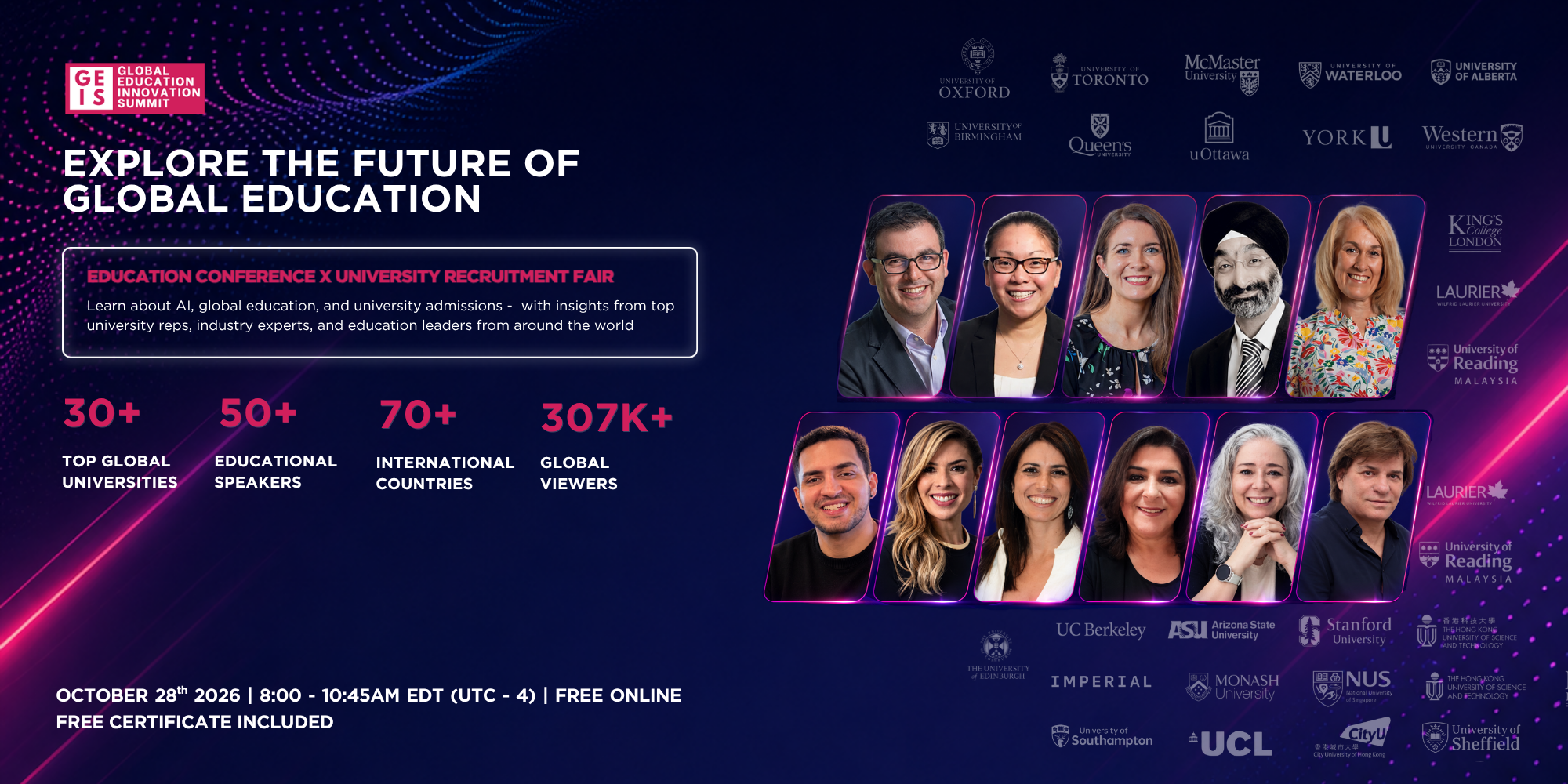
One of the most effective ways to evaluate universities beyond rankings is through direct engagement with their admissions teams and academic leaders. The Global Education Innovation Summit (GEIS) 2026, hosted by Rosedale International Education, offers precisely this opportunity.
Taking place on October 28, 2026 as a free virtual event, GEIS 2026 brings together representatives from more than 40 world-class institutions across the United Kingdom, Canada, Europe, the United States, and the Asia-Pacific region.
Among the participating universities are several institutions that consistently appear in the upper tiers of all three major ranking systems. From the United Kingdom, attendees include Imperial College London, the University of Oxford, UCL, the University of Edinburgh, the University of Sheffield, the University of Birmingham, the University of Southampton, and the University of Leeds. Canada is represented by the University of Toronto, McMaster University, the University of Waterloo, the University of Alberta, Queen’s University, the University of Ottawa, York University, and Western University.
From Europe and the United States, participants include Trinity College Dublin, University College Dublin, RWTH Aachen, the University of Groningen, Arizona State University, UC Berkeley, and Stanford University. The Asia-Pacific region features the National University of Singapore, the University of Hong Kong, Hong Kong Baptist University, Peking University, Tsinghua University, Monash University, the University of Technology Sydney, the University of Reading Malaysia, and the University of Auckland.
With more than 30 speakers and 43 interactive sessions covering topics such as student readiness in the AI era, global admissions pathways, and institutional digital transformation, GEIS 2026 provides a platform for students, parents, and educators to engage directly with admissions officers and academic leaders from institutions that represent the full spectrum of global university ranking for students lists.
Frequently Asked Questions
What is the most reliable global university ranking for students?
No single ranking system is universally definitive. QS, THE, and ARWU each offer valuable perspectives, and students benefit most from consulting multiple rankings alongside their own research into program fit, campus culture, and career outcomes.
How should I use rankings when shortlisting universities?
Use rankings as an initial filter to identify institutions with strong reputations in your area of interest. Then look deeper into program offerings, faculty expertise, student support services, and graduate employment data to determine which institution is the best fit for your goals.
What is the Global Education Innovation Summit 2026?
GEIS 2026 is a free virtual summit hosted by Rosedale International Education on October 28, 2026. The event features representatives from over 40 leading universities, more than 30 speakers, and interactive sessions covering AI in education, global admissions, and the transition from K-12 to higher education.
Can I speak directly with university admissions teams at GEIS 2026?
Yes. GEIS 2026 includes networking lounges, one-on-one video chats, and a searchable participant directory that enables attendees to connect directly with university representatives from institutions across the United Kingdom, Canada, Europe, the United States, and the Asia-Pacific region.
Is GEIS 2026 only for students?
No. The summit is designed for students, parents, educators, school administrators, and education technology professionals. Anyone passionate about the future of global education is welcome to attend and register at no cost.
Discover the Right University for You at GEIS 2026
Rankings provide a valuable framework, but the most informed decisions are made through direct engagement with the institutions that shape global education. The Global Education Innovation Summit 2026 offers a rare opportunity to meet admissions leaders, explore global pathways, and gain insights from some of the world’s most respected universities, all in one day and at no cost.
Whether you are a student exploring your options, a parent guiding your child toward the right institution, or a school leader looking to strengthen university partnerships, GEIS 2026 is designed for you.
Register for free at geisummit.com and take the next step toward making a confident, well-informed decision about your educational future with Rosedale International Education.