
The conversation around student readiness has changed. For decades, academic performance, standardized test scores, and university acceptance rates served as the primary indicators of whether a young person was prepared for the future. Today, the rapid integration of artificial intelligence across industries has rewritten those expectations entirely.
According to the World Economic Forum’s Future of Jobs Report, 39 percent of workers’ core skills are expected to change by 2030. At the same time, two-thirds of global employers now plan to hire talent with AI-specific competencies. For school leaders and parents evaluating educational programs, this raises an urgent question: are our students truly ready for the AI era?
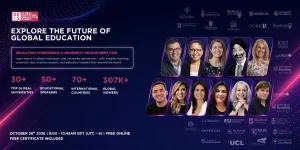
AI student readiness is no longer a theoretical concern. It is a measurable, actionable goal that schools and universities worldwide are beginning to address through curriculum reform, admissions criteria updates, and new literacy frameworks. At the upcoming Global Education Innovation Summit (GEIS) 2026, hosted by Rosedale International Education on October 28, leading voices from institutions such as Imperial College London, UC Berkeley, and the University of Waterloo will explore exactly what student readiness looks like in an AI-driven world.
What University Rankings Measure and What They Miss
University rankings have long been a go-to resource for parents and educators evaluating higher education options. Systems such as QS World University Rankings, Times Higher Education (THE), and the Academic Ranking of World Universities (ARWU) provide structured comparisons based on research output, faculty quality, citation impact, and employer reputation.
These metrics have their place. They help identify institutions with strong academic infrastructure, experienced faculty, and established research programs. However, what they consistently fail to measure is whether an institution is preparing students for the realities of an AI-transformed workforce.
A university may rank in the global top 50 for research citations, yet offer no structured pathway for students to develop practical AI literacy. Rankings do not assess whether graduates leave with the ability to evaluate AI outputs, collaborate with intelligent systems, or apply ethical reasoning to technology-driven decisions. In short, traditional rankings measure institutional prestige, but not necessarily student AI readiness.
For school owners and parents making decisions about where to direct students, this gap deserves serious attention. The question is not only which university ranks highest, but which institution is actively preparing students for ai era education.
QS, THE, and ARWU: Why Traditional Academic Readiness Is No Longer Enough
Let us look more closely at what these major ranking systems actually evaluate. QS places significant weight on academic and employer reputation surveys, faculty-to-student ratios, and international diversity. THE emphasizes teaching environment, research volume, and knowledge transfer. ARWU focuses heavily on Nobel laureates, highly cited researchers, and publications in top journals.
None of these frameworks currently incorporate metrics for AI integration in curriculum, student exposure to applied AI projects, or institutional strategies for preparing students for ai-driven careers. As a result, a school leader reviewing rankings alone may overlook institutions that are quietly leading the way in future-ready education.
The QS World Future Skills Index, introduced in recent years, has begun to address this gap by evaluating how well countries and institutions equip graduates with skills that the labor market will demand. This is a step in the right direction, but it remains supplementary to the core ranking methodology.
What this means for parents and school administrators is clear: rankings are a starting point, not a finish line. Evaluating a university’s commitment to ai skills for students requires looking beyond league tables and into the specifics of curriculum design, industry partnerships, and experiential learning opportunities.
The AI Literacy Framework: What Every Student Should Know
So what does genuine student ai readiness actually look like? Several leading organizations have begun defining it through structured literacy frameworks.
In June 2026, the European Commission and OECD, with support from CodeAI (formerly Code.org), published a comprehensive AI Literacy Framework for primary and secondary education. This framework organizes AI literacy into four core domains: Engaging with AI, Creating with AI, Managing AI, and Designing AI. Notably, the framework emphasizes that simply using AI tools does not constitute literacy. True readiness involves understanding how these systems work, evaluating their outputs critically, and making informed decisions about when and how to apply them.
Similarly, the Digital Education Council has outlined a five-dimension AI literacy framework for higher education that takes a human-centered approach. It prioritizes competencies in critical thinking, creativity, and emotional intelligence alongside technical fluency. These dimensions are structured across three mastery levels, providing institutions with clear benchmarks for student progression.
ETS and aiEDU also announced a strategic collaboration in early 2026 to accelerate AI readiness in education. As aiEDU’s CEO noted, true AI readiness is about ensuring students develop durable skills, judgment, and agency to thrive alongside AI, not merely training them to operate specific tools.
For school leaders evaluating programs, these frameworks offer a practical lens. A school that teaches students to write prompts but not to question AI outputs is only addressing part of the picture. Preparing students for ai means building capacity across technical literacy, ethical reasoning, and human judgment.
How Universities Are Redefining Readiness Criteria
The shift toward AI-integrated education is not theoretical. Universities around the world are already redesigning their admissions criteria and graduation requirements to reflect the demands of an AI-shaped workforce.
Purdue University, for example, announced in early 2026 that AI working competency will become a requirement for graduation, beginning with incoming freshmen in the fall of 2026. This means graduates entering the job market in 2027 and beyond will carry a documented AI baseline that previous cohorts did not have. Each college dean at Purdue has been tasked with developing discipline-specific proficiency standards, ensuring that AI readiness is embedded across departments rather than siloed within computer science programs.
Across the broader landscape, universities are recognizing that skills, projects, and real-world engagement are playing an increasingly significant role in admissions decisions. As of 2026, 85 percent of graduating students reported using AI tools during their degree, but only 28 percent received formal instruction on how to use them effectively. This disconnect is precisely what forward-thinking institutions are working to close.
Admissions professionals are also reconsidering how they assess student potential. The American Association of Collegiate Registrars and Admissions Officers (AACRAO) has highlighted the growing importance of holistic admissions practices that evaluate durable skills such as critical thinking, resilience, communication, and leadership alongside traditional academic metrics.
For parents and school leaders, this signals a clear direction. Universities are no longer looking solely at grades and test scores. They want evidence of adaptability, ethical awareness, and the capacity to work alongside intelligent systems.
Practical Steps: From K-12 to Higher Education AI Preparedness
Building student ai readiness is not a single initiative. It is a sustained effort that spans the entire educational journey, from primary school through university and into the workforce. Here are the practical steps that school leaders and parents should consider.
At the K-12 level, schools should begin by embedding foundational AI literacy into existing subject areas. The European Commission and OECD framework recommends integrating AI concepts across disciplines rather than confining them to standalone technology courses. Science classes can explore how AI processes data, language arts can examine AI-generated text critically, and social studies can address the ethical implications of automated decision-making.
Professional development for teachers is equally important. Educators who understand AI themselves are better equipped to guide students through its complexities. Schools should invest in training programs that go beyond tool demonstrations and into the pedagogical strategies for teaching with and about AI.
At the secondary level, institutions should introduce project-based learning that requires students to solve real-world problems using AI tools. This includes prompt engineering, data analysis, and collaborative work with AI systems. The goal is not to produce engineers, but to develop informed, capable users who understand the strengths and limitations of the technology they are using.
For the transition to higher education, schools should prepare students to demonstrate AI competencies in their applications. This might include portfolios of AI-integrated projects, evidence of ethical reasoning, or participation in programs that emphasize future-ready skills.
Finally, parents play a critical role. Encouraging responsible AI exploration at home, asking schools about their AI curriculum, and staying informed about evolving admissions criteria are all meaningful contributions to a child’s long-term preparedness.
Frequently Asked Questions
What is AI student readiness?
AI student readiness refers to a student’s ability to understand, interact with, and critically evaluate artificial intelligence technologies. It goes beyond knowing how to use AI tools. It includes understanding how AI systems work, recognizing their limitations, applying ethical judgment in technology-related decisions, and developing the adaptability to navigate a workforce increasingly shaped by intelligent automation.
Why is AI literacy important for K-12 students?
The integration of AI into professional environments is accelerating. Students who graduate without foundational AI literacy risk entering a workforce where they are unable to collaborate effectively with AI systems, assess the reliability of automated outputs, or contribute meaningfully to teams that rely on AI-driven processes. Building these skills early ensures a smoother transition into higher education and employment.
What AI skills should students develop?
Key ai skills for students include critical evaluation of AI outputs, prompt engineering, data literacy, ethical reasoning about AI applications, collaboration with AI systems, and the ability to determine when human judgment should override automated recommendations. Equally important are durable human skills such as communication, creativity, and problem-solving.
How are universities changing their admissions criteria to reflect AI readiness?
Many universities are beginning to adopt holistic admissions practices that value demonstrated skills, real-world projects, and adaptability alongside traditional academic metrics. Some institutions, such as Purdue University, have introduced formal AI competency requirements for graduation. Admissions teams are increasingly looking for evidence that applicants can think across disciplines and engage thoughtfully with emerging technologies.
What is the Global Education Innovation Summit (GEIS) 2026?
The Global Education Innovation Summit 2026 is a free virtual event hosted by Rosedale International Education on October 28, 2026. The summit brings together over 30 speakers and 40 university partners from institutions including Oxford, Imperial College London, NUS, and UC Berkeley. Sessions cover AI in education, global admissions, K-12 to higher education pathways, and the future of student readiness. Registration is open to educators, parents, students, and industry professionals worldwide.
How can parents prepare their children for the AI era?
Parents can begin by encouraging responsible exploration of AI tools at home, asking schools about their AI curriculum and readiness initiatives, staying informed about how university admissions criteria are evolving, and seeking out educational events such as GEIS 2026 that provide insights from global education leaders.
Join the Conversation at GEIS 2026
The skills that define student readiness are changing, and the institutions, educators, and families that recognize this shift today will be the ones best positioned to shape the future of learning tomorrow.
If you are a school owner, administrator, or parent looking for actionable insights on how to navigate this transformation, the Global Education Innovation Summit 2026 is the place to start. Hosted by Rosedale International Education on October 28, 2026, GEIS brings together more than 30 world-class speakers and representatives from over 40 universities to discuss AI in education, evolving admissions landscapes, and the competencies that will matter most in the years ahead.
The summit features a dedicated panel session titled “Student Readiness in the AI Era: From Admissions to Employability,” with leaders from Imperial College London, University of Waterloo, University College Dublin, UC Berkeley, and University of Technology Sydney. This session directly addresses how institutions are redefining readiness criteria, embedding AI literacy into the student experience, and aligning education with the demands of a rapidly evolving workforce.
Registration is free, and the event is open to educators, parents, students, and industry leaders worldwide. Whether you are exploring pathways for your students or evaluating how your institution can stay ahead, this summit offers the perspectives and connections you need.
Register for GEIS 2026 today and take the first step toward preparing students for success in the AI era.