
Artificial intelligence is no longer a futuristic concept reserved for research labs and technology companies. It is here, and it is transforming classrooms around the world. From automated lesson planning to real-time student feedback, AI in the classroom has moved from theoretical discussion to everyday practice for thousands of educators across continents.
For school owners, academic directors, and parents alike, understanding how artificial intelligence in the classroom works is no longer optional. It is essential. The schools that embrace these tools today are the ones preparing their students for a workforce that will demand digital fluency, critical thinking, and adaptability.
But what does using AI in the classroom actually look like on a day-to-day basis? How are teachers integrating these tools without becoming technology experts overnight? And where can education leaders go to learn more about the latest innovations shaping the global classroom?
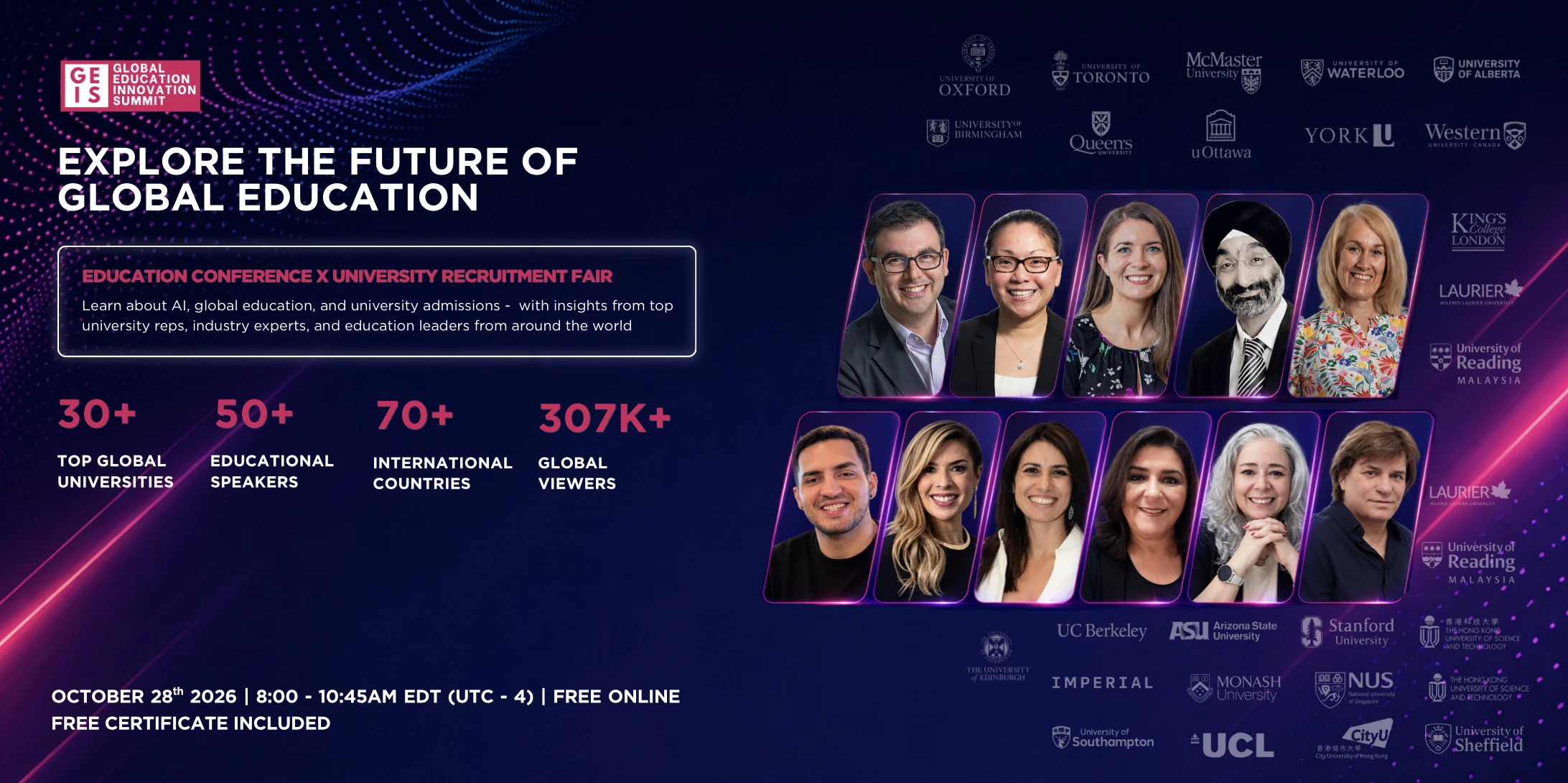
This article explores the practical applications of AI that teachers are already using, the benefits these tools bring to both educators and learners, and how you can take the next step by joining the Global Education Innovation Summit (GEIS) 2026, hosted by Rosedale International Education on October 28, 2026.
From Theory to Practice: AI Tools Teachers Are Using Today
The conversation around AI in education has shifted dramatically. Just a few years ago, many schools were debating whether to allow AI tools at all. Today, the question is no longer whether to use AI, but how to use it effectively and responsibly.
According to recent surveys, more than 60 percent of K-12 teachers in the United States have reported using AI tools in some capacity during the 2024 to 2025 school year. That number has only grown since. Teachers are using platforms such as ChatGPT, Claude, MagicSchool AI, and Diffit to handle tasks that once consumed hours of their personal time, including drafting lesson plans, generating quizzes, writing individualized feedback, and creating differentiated reading materials for students at varying proficiency levels.
The shift is not limited to a single region. Across Asia, Europe, Africa, and the Americas, educators are discovering that AI tools can serve as a reliable co-pilot, helping them work smarter without replacing the human judgment and empathy that define great teaching. Schools represented at international education events, including the upcoming GEIS 2026, are leading the charge in exploring how ai classrooms can become the new standard for innovative learning environments.
Lesson Planning, Content Generation, and Differentiated Instruction with AI
One of the most immediate and tangible benefits of using AI in the classroom is the amount of time it saves teachers during the planning process. Educators who have integrated AI into their weekly routines report reclaiming between five and ten hours of planning time, time that can be redirected toward direct student interaction, mentoring, and professional development.
Here is how teachers are putting AI to work in three critical areas.
Lesson Planning
Instead of building lesson plans from scratch, teachers are using AI to generate structured outlines that align with curriculum standards. A teacher might prompt an AI tool with specific parameters, such as grade level, subject, learning objectives, and duration, and receive a complete draft in minutes. This draft serves as a starting point that the teacher refines based on classroom context and student needs.
For example, a secondary school science teacher could request a 50-minute lesson introducing cellular respiration for Grade 10 students, and the AI tool would produce an organized lesson flow, complete with warm-up activities, core instruction, guided practice, and an exit ticket.
Content Generation
Beyond lesson plans, AI tools are helping teachers produce supplementary materials at scale. This includes worksheets, comprehension questions, vocabulary lists, rubrics, and even parent communication templates. The ability to generate these materials quickly means that teachers can spend less time on administrative tasks and more time on what matters most: teaching.
Teachers working in multilingual environments find this particularly valuable, as AI can assist in adapting content into multiple languages while maintaining instructional quality and consistency.
Differentiated Instruction
Perhaps the most powerful application of AI in classroom settings is differentiated instruction. In a typical class, students arrive with widely varying skill levels, learning preferences, and background knowledge. AI makes it possible to create multiple versions of the same lesson or assignment, each tailored to a different proficiency level, in a fraction of the time it would take to do manually.
A language arts teacher, for instance, can input a single reading passage and ask the AI to produce three versions at different reading levels. All three versions cover the same core content, which means the entire class can participate in the same discussion while working with material suited to their individual abilities.
Student Engagement and Real-Time Feedback Through AI
Keeping students engaged has always been one of the greatest challenges in education. Traditional methods of assessment, such as end-of-unit tests and quarterly exams, often reveal learning gaps only after they have widened beyond easy correction. AI is changing this dynamic by enabling real-time feedback loops that keep students on track and keep teachers informed.
Instant Formative Assessment
AI-powered platforms can analyze student responses as they are submitted, identifying patterns of misunderstanding and flagging areas where individual students or entire classes may need additional support. Rather than waiting until the end of a grading period, teachers receive actionable insights during the lesson itself. This allows them to adjust their instruction in real time, addressing misconceptions before they become entrenched.
For example, if an AI tool detects that a significant portion of the class is struggling with a particular concept during a practice exercise, it can alert the teacher immediately. The teacher can then pause the activity, clarify the concept, and allow students to try again with a better foundation.
Personalized Learning Paths
Beyond assessment, AI tools can recommend personalized learning paths for individual students. Based on a student’s performance data, the system can suggest additional practice materials, extension activities, or alternative explanations that match the student’s learning style. This level of personalization was previously impossible for a single teacher managing 25 to 35 students in a classroom.
Increased Student Autonomy
When students receive timely, constructive feedback from AI tools, they develop a greater sense of ownership over their learning. They can see where they stand, understand what they need to improve, and take initiative in seeking out resources. This shift from passive learning to active self-directed study is one of the most significant long-term benefits of integrating artificial intelligence in the classroom.
How to Start Using AI in Your Classroom Without Technical Expertise
One of the most common misconceptions about AI in education is that it requires advanced technical knowledge. The reality is quite different. Most AI tools designed for educators are built with simplicity in mind. If a teacher can type a sentence, they can use these tools effectively.
Here are practical steps that any educator can follow to begin integrating AI into their workflow.
Start with one task. Rather than overhauling an entire teaching routine, choose a single repetitive task that consumes significant time, such as writing quiz questions or drafting report card comments. Use an AI tool to handle that one task for a few weeks before expanding to other areas.
Use free tools first. Many of the most powerful AI platforms offer free tiers that provide more than enough functionality for individual teachers. Tools like ChatGPT, Claude, and MagicSchool AI all offer accessible entry points that require no financial commitment.
Join professional communities. Teachers around the world are sharing their AI experiences through professional learning networks, social media groups, and education conferences. Learning from peers who have already navigated the early stages of adoption can significantly reduce the learning curve.
Attend events like GEIS 2026. The Global Education Innovation Summit 2026 offers dedicated sessions on AI in education, featuring speakers from institutions such as Oxford University, Arizona State University, the National University of Singapore, and JISC UK. These sessions provide actionable frameworks that educators can implement immediately after the event.
Prioritize ethical use. As with any powerful tool, AI must be used responsibly. Teachers should be transparent with students about when and how AI is being used, and schools should develop clear policies that balance innovation with academic integrity.
Frequently Asked Questions
What is AI in the classroom?
AI in the classroom refers to the use of artificial intelligence tools and software to support teaching and learning processes. This includes applications for lesson planning, content generation, student assessment, personalized learning, and administrative tasks. These tools are designed to assist educators, not replace them.
Will AI replace teachers?
No. AI serves as a co-pilot for teachers, handling time-consuming administrative and repetitive tasks so that educators can focus on the aspects of teaching that require human connection, empathy, creativity, and professional judgment. The role of the teacher is evolving, not disappearing.
Is AI safe to use with students?
When used responsibly, AI tools can be safe and beneficial for students. Schools should establish clear usage policies, ensure data privacy compliance, and educate both teachers and students on ethical AI practices. Many platforms designed for education include built-in safety features and content filters.
Do teachers need technical skills to use AI?
Most AI tools designed for education require no coding or technical expertise. They operate through simple text-based prompts and intuitive interfaces. If a teacher can write an email, they can use these tools effectively.
What is the Global Education Innovation Summit (GEIS) 2026?
The Global Education Innovation Summit 2026 is a free virtual event hosted by Rosedale International Education on October 28, 2026. It brings together over 30 speakers and 40 world-class university partners to discuss AI in education, global admissions, K-12 to higher education transitions, and innovation in learning technology. The summit is open to educators, school leaders, parents, students, and industry professionals worldwide.
How can I attend GEIS 2026?
Registration for GEIS 2026 is completely free. You can register at this link to secure your spot. All sessions are conducted online and recordings are made available after the live event, so you can participate regardless of your time zone.
Take the Next Step: Join GEIS 2026 with Rosedale International Education
The integration of AI in the classroom is not a passing trend. It is a fundamental shift in how education is designed, delivered, and experienced. Schools and educators who take the time to understand these tools today will be better positioned to prepare their students for the challenges and opportunities of tomorrow.
If you are a school owner, academic director, teacher, or parent who wants to stay ahead of this transformation, the Global Education Innovation Summit 2026 is your opportunity to learn from the world’s leading voices in education and technology. The summit features over 30 speakers from institutions including Oxford University, Imperial College London, the University of Toronto, Arizona State University, the National University of Singapore, and many more.
GEIS 2026 takes place on October 28, 2026, and it is entirely free to attend. Whether you join the live sessions or watch the recordings at your convenience, you will walk away with practical strategies, global perspectives, and a network of peers committed to innovation in education.